

What are the different Private Jet categories
Introduction to Private Jets
Imagine soaring through the skies in luxurious comfort, bypassing crowded airports and long security lines. That’s the allure of private jets—a world where travel is tailored to your schedule, preferences, and ultimate convenience. Whether you’re jetting off for business or pleasure, understanding the different categories of private jets can help you choose the perfect aircraft for your journey.
From nimble very light jets that whisk you away on short trips to ultra-long range jets designed for intercontinental adventures, each category offers unique benefits and features. In this blog post, we’ll explore these categories in depth, helping you navigate the exciting world of private aviation with ease. Buckle up as we take flight into everything you need to know about flying privately!
The Different Categories of Private Jets
Private jets come in various categories, each designed to cater to specific travel needs. Light jets are perfect for short trips and smaller groups. They offer agility and efficiency without sacrificing comfort.
Midsize jets bridge the gap between light and large models. They provide more space and range, accommodating additional passengers comfortably on longer flights.
Super midsize jets take luxury a step further, featuring enhanced cabin amenities and advanced technology. Travelers can enjoy a spacious environment that feels almost like home in the sky.
Large cabin jets offer unparalleled comfort for long-haul journeys. With expansive seating arrangements and high-end features, they are ideal for business or leisure travel where every detail counts.
Ultra-long range jets push the boundaries of distance with remarkable speed. These aircraft can connect continents effortlessly while providing top-tier luxury onboard experiences tailored to discerning travelers’ expectations.
Light Jets
Light jets are an excellent choice for short to medium-range flights. Their nimble design allows them to access smaller airports, making travel more convenient and efficient.
Typically accommodating up to 8 passengers, these jets balance comfort with practicality. With a cruising speed of around 400 knots, light jets can cover distances swiftly without sacrificing the luxury experience.
Ideal for business trips or weekend getaways, they offer essential amenities while maintaining a lower operational cost compared to larger aircraft.
Examples include popular models like the Embraer Phenom 100 and the Cessna Citation M2. Both provide reliable performance and modern interiors that enhance passenger satisfaction.
For those seeking versatility in their travel plans without breaking the bank, light jets stand out as a smart option in private aviation.
Midsize Jets
Midsize jets strike a balance between comfort and efficiency. Ideal for those seeking more space without the bulk of larger aircraft, they cater to both business and leisure travelers.
These jets typically accommodate six to eight passengers comfortably. They offer a range of amenities, including spacious cabins, well-equipped galleys, and sometimes even sleeping quarters. This makes them perfect for longer flights.
Flight ranges are impressive as well; most midsize jets can travel around 2,500 nautical miles. That means you could hop from New York to Los Angeles with ease.
The performance capabilities of these aircraft make them versatile options for various needs—whether it’s corporate travel or family vacations. Plus, their ability to access smaller airports adds convenience that commercial airlines simply cannot provide.
Large Cabin Jets
Large cabin jets are designed for those who seek maximum comfort and space during their travels. With ample room for both passengers and luggage, these aircraft can accommodate larger groups seamlessly.
Typically seating 10 to 19 passengers, they provide luxurious amenities that rival high-end hotels. Expect plush seating arrangements, spacious lavatories, and sometimes even full galleys for in-flight dining experiences.
The range of large cabin jets allows travelers to fly non-stop on long-haul routes. This is perfect for business executives or families needing to reach far-off destinations without layovers.
Advanced technology improves the flying experience as well. Enhanced soundproofing ensures a calm atmosphere while onboard entertainment systems keep everyone engaged throughout the journey.
Ultra-Long Range Jets
Ultra-long range jets are the epitome of luxury and efficiency in private aviation. These aircraft are designed for intercontinental travel, connecting major cities across the globe without the need for fuel stops.
With a flight range that exceeds 6,000 nautical miles, they can comfortably reach destinations like New York to Tokyo or Los Angeles to London. This capability makes them ideal for business executives and high-profile travelers who value time as much as comfort.
Inside an ultra-long range jet, passengers enjoy spacious cabins equipped with state-of-the-art amenities. Think plush seating arrangements, full dining facilities, and even private bedrooms—making long flights feel shorter and more enjoyable.
Additionally, advanced technology enhances both safety and performance. With sophisticated navigation systems and fuel-efficient engines, these jets offer not only luxury but also reliability on every journey.
Factors to Consider When Choosing a Private Jet Category
Choosing the right private jet category involves several key factors. First, consider your travel distance and frequency. Longer trips often require larger jets with extended range.
Next, assess passenger capacity. A very light jet might suffice for a small group, while larger parties may need a large cabin or ultra-long range jets for comfort.
Budget is also crucial. Different categories come with varying operating costs and charter rates. Understanding your spending limits can help narrow down options effectively.
Another important aspect is amenities and comfort level required on board. Super midsize jets typically offer more luxurious features compared to light jets.
Think about your destination choices. Some smaller airports have restrictions that may affect which type of aircraft you can use efficiently.
Benefits of Flying on a Private Jet
Flying on a private jet opens the door to unparalleled convenience. You can choose your departure time, ensuring that you arrive at your destination when it suits you best.
Privacy is another significant advantage. Enjoy exclusive space without interruptions from strangers or long security lines.
The comfort level is exceptional. Luxurious interiors and personalized services create an atmosphere of relaxation, whether for work or leisure.
Time efficiency stands out as well. With access to thousands of airports, you can land closer to your final destination and skip lengthy layovers.
Additionally, flexibility in itinerary adjustments allows for spontaneous changes—perfect for business travelers with unpredictable schedules.
Flying privately often means enjoying gourmet meals prepared by top chefs tailored just for you. It’s an experience that elevates travel beyond mere transportation into something truly memorable.
Cost Comparison between Private Jet Categories
When it comes to flying in style, the cost of private jets varies significantly across categories. Very light jets typically offer the most affordable option for those seeking a quick getaway or short trips. Their lower operating costs make them attractive for budget-conscious travelers.
Light jets and midsize jets present a step up in price but provide more space and comfort. Light jets are ideal for small groups, while midsize options accommodate slightly larger parties with enhanced amenities.
Super midsize and large cabin jets command higher fees due to their advanced technology and luxury features. These aircraft cater to longer distances, ensuring maximum comfort during extended flights.
Ultra long range jets sit at the top of the pricing spectrum, designed to cross continents effortlessly. They boast lavish interiors that redefine travel luxury but come with significant operational costs.
Understanding these differences can help potential renters make informed choices based on their needs and budgets.
Aircraft Type Overview
Choosing the right private jet category can significantly enhance your travel experience. Understanding the distinctions between very light jets, light jets, midsize jets, super midsize jets, large cabin jets, and ultra-long range jets allows you to make an informed decision tailored to your needs.
Each category serves a unique purpose and comes with its own set of advantages. From cost considerations to comfort levels and range capabilities, weighing these factors will help ensure that you select a jet that aligns perfectly with your travel plans.
Flying on a private jet offers unparalleled convenience and luxury. With multiple categories available, there is likely a perfect fit for every traveler’s preferences and requirements. Whether you’re heading out for a quick business trip or embarking on an extended journey across continents, exploring the right options in private aviation opens up new horizons.
If you are considering purchase a small jet either for personal or business use – Then please contact us today where we can guide you through the current aircraft marketplace as well as discuss aircraft costs and values. Contact Us
Considering buying a private jet? View our article on a buyers guide to purchasing an aircraft HERE or click here to view our private jets for sale


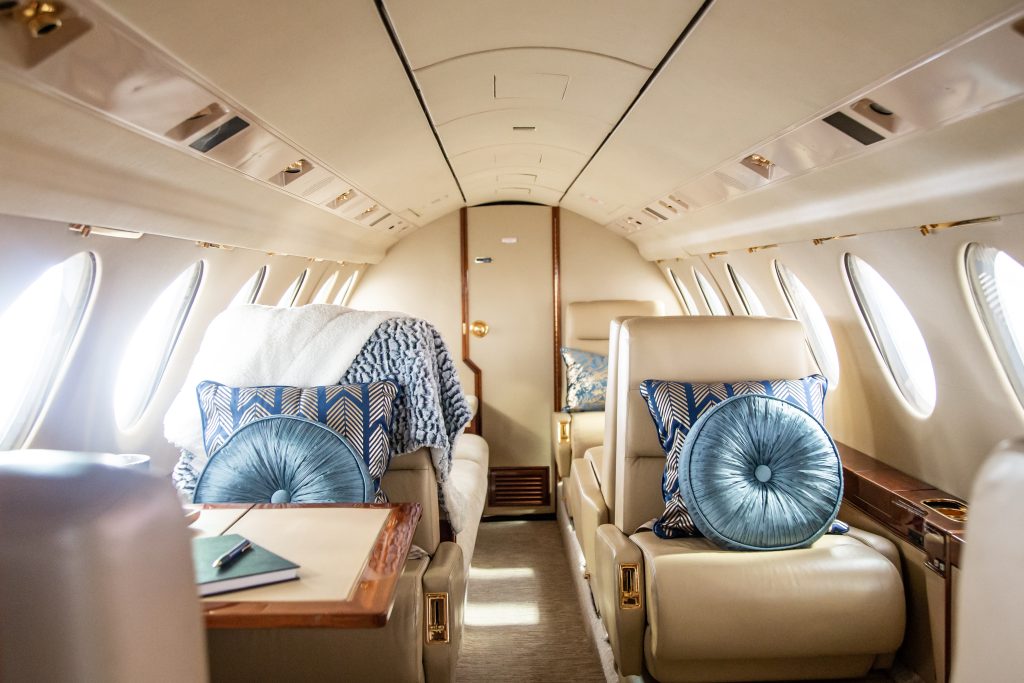
Understanding Private Jet Categories
Private aircraft are broadly grouped into categories that reflect cabin size, range, passenger capacity, and operating cost. Understanding these categories before entering the market as a buyer will save time and focus the search. The boundaries between categories are not rigid — manufacturers and brokers use different terminology — but the framework below reflects the practical distinctions that matter in acquisition decisions.
Entry-Level Jets and Very Light Jets (VLJs)
The entry-level or very light jet category covers twin-engine pressurised turbofans certified to transport standards, typically seating four to six passengers, with ranges of 1,000–1,500 nm. They are designed for single-pilot IFR operation and represent the lowest-cost route into turbofan jet ownership.
Cabin dimensions are compact — expect approximately 11 ft of usable cabin length and 4.7–4.9 ft of headroom — and baggage capacity is modest. These aircraft operate comfortably on regional sectors: London to Rome, Frankfurt to Madrid, or comparable distances. They are not suited to long-haul or intercontinental missions.
Representative types include the Cessna Citation Jet (original CJ), the Cessna Citation CJ1 and CJ1+, and the Embraer Phenom 100. Acquisition costs for well-maintained pre-owned examples begin around £800,000 for the oldest airframes and extend to approximately £2.5 million for current-specification Phenom 100EV aircraft.
Buyers considering this category should review our Cessna Citation CJ1 guide, the Citation Jet buyer’s guide, and the Embraer Phenom 100 guide for detailed specifications and ownership cost analysis.
Light Jets
Light jets extend the entry-level category with longer range, larger cabins, and in most cases improved avionics. Typical seating is six to eight passengers, ranges of 1,500–2,200 nm, and cabin heights that approach but do not reach full stand-up in most models. They are routinely operated single-pilot and represent the most common category for European owner-operators and small charter fleets.
Cabin length in the light jet class typically runs from 15 to 19 ft, offering meaningful improvement over VLJs without the weight, operating cost, or acquisition price of mid-size jets. On a London to Ibiza, Geneva to Oslo, or Paris to Marrakech mission profile, a light jet performs well and keeps operating costs substantially below larger categories.
Key types include the Cessna Citation CJ4, Embraer Phenom 300, and the Pilatus PC-12 (which, as a turboprop, bridges the turboprop and light jet categories in terms of capability and cost). Acquisition costs in the pre-owned light jet market range from approximately £2.5 million to £7.5 million for well-maintained examples.
Further reading: Cessna Citation CJ4 guide, Embraer Phenom 300 guide, Pilatus PC-12 guide, Pilatus PC-12 PRO guide.
Midsize Jets
The midsize jet category introduces stand-up or near-stand-up cabin height, seating for seven to nine passengers in a proper club configuration, and ranges of 2,000–2,800 nm. These aircraft are the workhorses of European charter and private aviation, offering genuine comfort for four to five-hour sectors without the operating costs of the heavier super-midsize and large-cabin categories.
Typical cabin dimensions are 17–20 ft long, 5.5–5.7 ft wide, and 5.5–5.7 ft tall. Most midsize jets offer a galley, enclosed or semi-enclosed lavatory, and baggage volumes sufficient for a week’s luggage for six to eight passengers. Crew requirements are typically two pilots, though single-pilot type ratings exist for certain types.
The Cessna Citation XLS and XLS+ are the definitive midsize jet by fleet size. With over 900 delivered and active operations across every major market, the XLS family represents the standard against which all other midsize jets are measured for support, liquidity, and cost predictability. Pre-owned midsize jets range from approximately £2.5 million for older XLS airframes to £7.5 million for current XLS+ examples.
See our Cessna Citation XLS/XLS+ guide for full specifications and ownership cost analysis.
Super-Midsize Jets
Super-midsize jets represent a meaningful step up in cabin volume, range, and passenger comfort. Typical configurations seat eight to ten passengers in a stand-up cabin, with ranges of 3,000–3,500 nm. This category bridges the gap between mid-size and large-cabin jets and is well-suited to transatlantic-adjacent missions, including London to the eastern seaboard of the United States under favourable conditions.
Cabin dimensions are substantially larger than mid-size: typically 25–30 ft long, 6.5–7.0 ft wide, and 5.9–6.1 ft tall. Full stand-up headroom, a proper galley, and a dedicated enclosed lavatory are standard. Many super-midsize jets offer flat-floor configurations that allow passengers to work and rest comfortably on longer sectors.
The Embraer Legacy 500 is a key super-midsize reference aircraft in the pre-owned market, bringing fly-by-wire controls and the largest cabin cross-section in the category. The Pilatus PC-24, while not strictly a super-midsize by weight, offers comparable cabin dimensions with unique short-field capability. Pre-owned super-midsize jets range from approximately £7 million to £16 million.
Further reading: Embraer Legacy 500 guide, Pilatus PC-24 buyer’s guide.
Large-Cabin Jets
Large-cabin jets deliver the most practical combination of cabin volume and range available outside the ultra-long-range category. Typical configurations offer 12–14 passenger seats in a cabin 40–55 ft long, with true stand-up headroom, full galley facilities, a separate enclosed lavatory or bathroom, and ranges of 3,500–5,000 nm. Dedicated crew rest areas are common on larger examples.
These aircraft are suited to intercontinental operations: London to New York, Dubai to London, or Singapore to Europe with a single technical stop. Two-crew operation is standard, and many operators add a cabin attendant on longer sectors. Operating costs are substantially higher than super-midsize types — fuel burn alone on a large-cabin twin typically exceeds 400 US gallons per hour — but the passenger experience delivered is commensurately superior.
The Embraer Legacy 600 and Legacy 650 represent accessible large-cabin options in the pre-owned market. The Legacy 600 is particularly notable for delivering large-cabin volume at operating costs comparable to some super-midsize types, making it attractive for first-time large-cabin buyers. Pre-owned large-cabin jets range from approximately £4.5 million for older Legacy 600 airframes to £18 million for well-maintained late-model Legacy 650E examples.
See our guides: Embraer Legacy 600 and Embraer Legacy 650.
Ultra-Long-Range Jets
Ultra-long-range jets (ULR) are designed for nonstop intercontinental operations without compromise to cabin comfort. Range typically exceeds 6,000 nm, with the capability to connect London to Los Angeles, New York to Tokyo, or Dubai to Sydney nonstop. These aircraft seat 10–19 passengers in cabin configurations that include sleeping berths, dedicated crew rest areas, separate dining and lounge areas, and full shower facilities on the largest types.
Reference types in this category include the Bombardier Global 6000/6500/7500, Gulfstream G550/G600/G650, and Dassault Falcon 8X. Acquisition costs for current-production ULR jets typically start above £30 million new, with pre-owned examples depending heavily on age, hours, and configuration. Operating costs exceed £5,000–£8,000 per flight hour for the largest types.
For buyers approaching this category, the acquisition process is more extended and the due diligence requirements — particularly around engine programme status, interior condition, and major check intervals — are proportionally more intensive than for lighter types. Specialist broker engagement from the initial search phase is strongly recommended.
Turboprops
Turboprops occupy a distinct category below the VLJ in terms of cruise speed and altitude but frequently equal or exceed VLJs in cabin volume, short-field capability, and per-hour operating cost efficiency. They are powered by propeller-driven turbine engines rather than pure turbofans, which limits cruise speed to approximately 280–320 ktas but reduces fuel burn substantially.
The turboprop’s core advantage over a comparable jet is the ability to operate from shorter, unpaved, or remote airstrips that are inaccessible to jets. This makes turboprops the default choice for safari operators, island-hopping services, bush operations, and owners who need to reach remote properties or airstrips that lack paved runways or precision approach aids.
The Pilatus PC-12 is the definitive single-engine turboprop in this context — it offers jet-comparable pressurisation and cabin quality, STOL performance, a freight door, and operating economics that are genuinely competitive with entry-level jets on a seat-mile basis. The PC-12 PRO represents the current pinnacle of the single-engine pressurised turboprop category.
For buyers comparing turboprops against entry-level jets, the decision typically comes down to cruise speed requirements and runway access needs. If every destination has a 1,500 m paved runway, a light jet will deliver faster door-to-door times. If some destinations require flexibility on surface type or runway length, the PC-12 or PC-24 become the rational choice. See our detailed guides: Pilatus PC-12 and Pilatus PC-12 PRO.