

Buyers Guide To The Cessna Citation CJ4
The Cessna CJ4 has a rich history, dating back to its first flight in 2008. Since then, it has become a highly sought-after aircraft for its exceptional performance and versatility. Its impressive range and speed make it a top choice for business travel and personal use alike. The CJ4 has continued to evolve over the years, with enhancements such as upgraded avionics and increased payload capacity. Its legacy of excellence has cemented its place as a top contender in the aviation industry.
In 2006, Cessna announced the incorporation of the CJ4 into their Citation business jet range. Its inaugural flight occurred in May 2008. While maintaining the CJ3’s user-friendly and cost-effective features, the CJ4 offers increased size and speed compared to its forerunner.
Make sure to review the specifications before purchasing a Cessna CJ4.
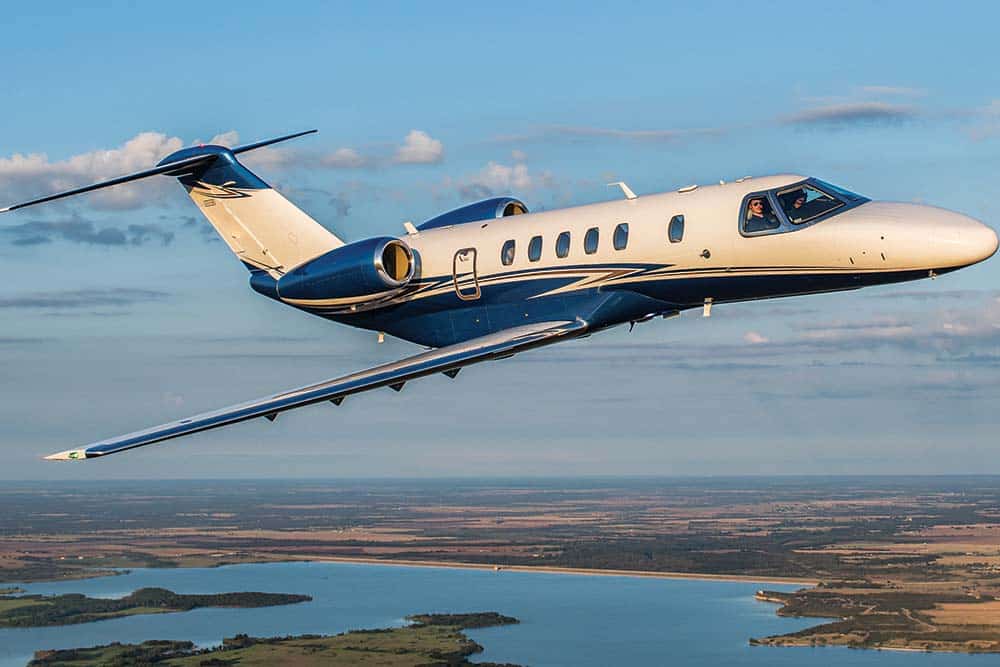
At a towering height of 15ft 3 inches and measuring 53ft 3 inches long, the CJ4 boasts a strikingly distinct wing design compared to its predecessor, the CJ3. With a wingspan of 50.5ft and a leading edge sweep of 12.5 degrees, this aircraft has been optimized for reduced drag. Its other notable enhancements include modulated speed brakes and ground spoilers. Additionally, the CJ4 offers increased fuel capacity and an impressive maximum range of 2,165 nautical miles.
With the inclusion of the new FJ44-4 engine, the CJ4 has significantly increased its thrust capabilities compared to its predecessors. Offering 3,400lbs on take-off, it surpasses all previous CJ models. In just 23 minutes, it can climb up to an impressive height of 45,000ft and maintain a steady cruising speed of 451 knots at its maximum operating altitude. Even at a lower cruising altitude of 31,000ft, it maintains a top speed of 453 knots.
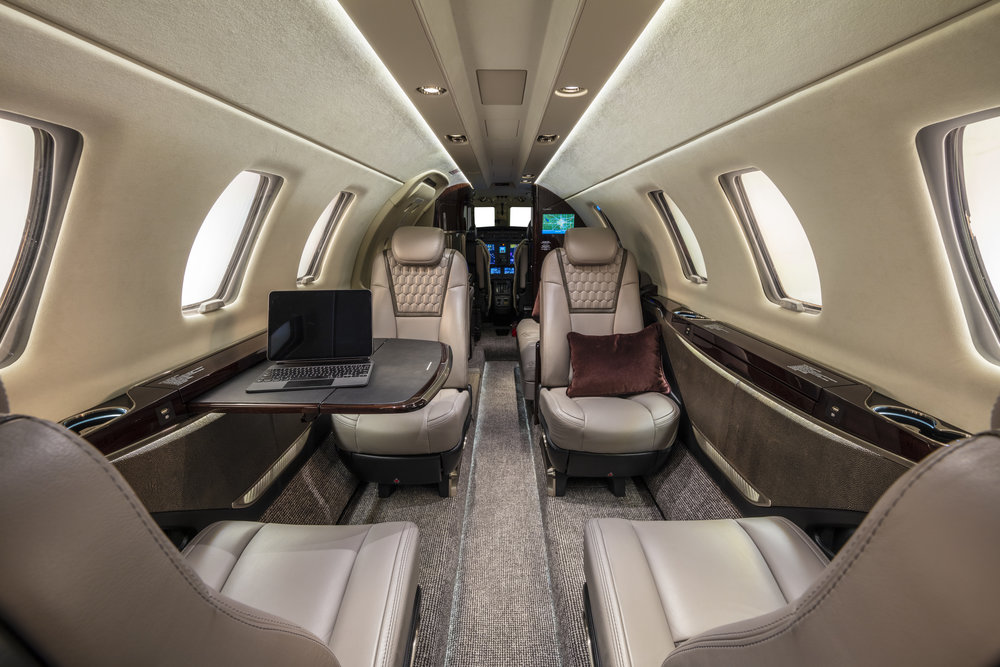
Measuring at 4.8ft in height, 4.9ft in width and 22.3ft in length, the cabin creates a spacious atmosphere with its seamless wall panels, mirrors and subtle lighting. It comfortably accommodates 8 passengers and includes MP3 players, DVD and CD players, as well as XM satellite radio for entertainment.
If you are considering purchase a small jet either for personal or business use – Then please contact us today where we can guide you through the current aircraft marketplace as well as discuss aircraft costs and values. Contact Us
Interested in the Cessna CJ1? View our CJ1 business jet guide HERE
Cessna Citation CJ4 Specifications
| Specification | Detail |
|---|---|
| Length | 53.3 ft (16.26 m) |
| Wingspan | 50.8 ft (15.49 m) |
| Height | 15.3 ft (4.66 m) |
| Cabin Length | 17.3 ft (5.28 m) |
| Cabin Width | 4.8 ft (1.46 m) |
| Cabin Height | 4.8 ft (1.46 m) |
| Max Take-Off Weight (MTOW) | 17,110 lb (7,761 kg) |
| Max Range | 2,165 nm (4,010 km) |
| Max Cruise Speed | 451 ktas |
| Max Altitude (Ceiling) | 45,000 ft |
| Engines | 2x Williams FJ44-4A turbofan |
| Typical Passenger Capacity | 7–9 |
| Baggage Volume | 77 cu ft (2.18 m³) |
CJ4 Ownership Costs
The Citation CJ4 occupies the upper end of the light jet category and its economics are consistent with what buyers in this segment expect from a well-supported, mature type.
Annual fixed costs for a single-pilot private operation run from approximately £220,000 to £330,000. Charter operations with two pilots add to this; budget £380,000–£500,000 for a fully crewed charter-rated operation. The CJ4 is one of the few jets in its category approved for single-pilot IFR operations under both EASA and FAA regulations, which significantly reduces crew costs for owner-operators who hold (or are willing to acquire) the necessary type rating.
Variable costs per flight hour are typically £1,100–£1,500, including fuel (the FJ44-4A engines burn approximately 145–165 US gallons per hour combined at cruise), engine reserves on Williams’ TAP Blue or Gold programme, and routine maintenance. The FJ44 series is the dominant engine in this weight class and Williams International’s support network is excellent.
Scheduled airframe maintenance follows Cessna’s phased inspection structure, with significant checks at 800-hour intervals. Annual inspection costs for a standard CJ4 are in the range of £35,000–£65,000. The Garmin G3000 avionics suite is reliable and Garmin’s global support infrastructure means avionics downtime events are resolved quickly in most operating regions.
CJ4 Market Position and Resale Value
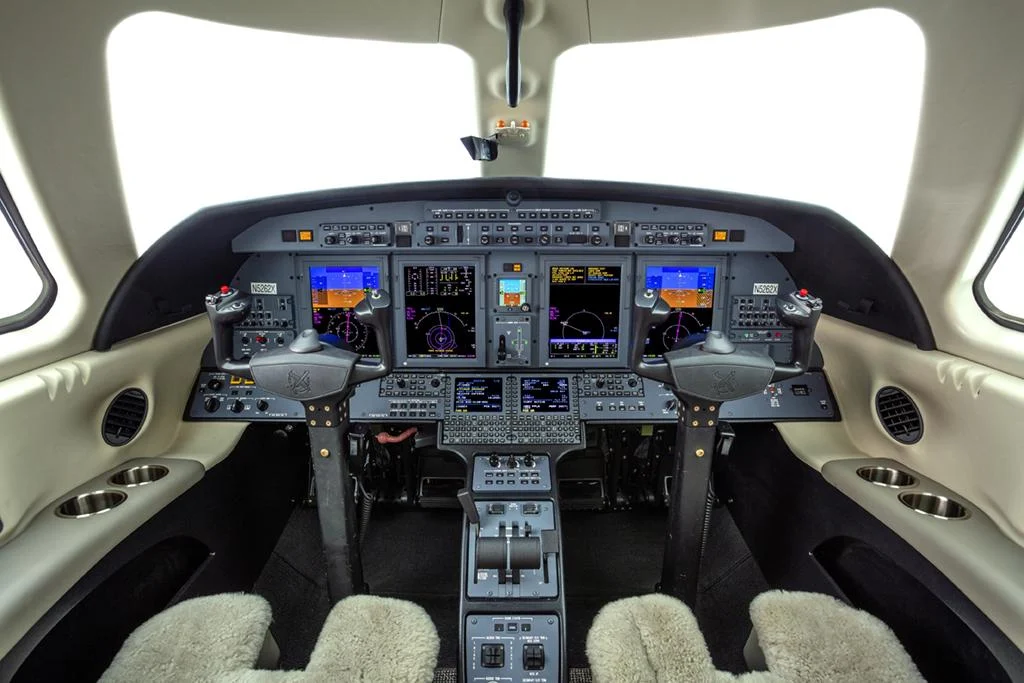
The CJ4 is the definitive aircraft at the top of the CJ family and it competes directly with the Embraer Phenom 300 and Bombardier Learjet 75 Liberty. Its range of 2,165 nm gives it genuine European cross-country capability, and the G3000 avionics suite is considered one of the best integrated cockpit systems in its class.
Pre-owned CJ4 values are stable and well-supported by the large fleet and Textron’s active new production. Early examples (2010–2014) trade from approximately £3.0 million to £4.8 million; 2015–2020 production commands £5.0 million to £7.5 million. Annual depreciation averages 5–7%. Market liquidity is good, and CJ4 transactions typically complete faster than average for the light jet category due to buyer familiarity with the type.
CJ4 Variants and History
The Citation CJ4 was announced by Cessna in 2006 as the largest and most capable member of the CJ family. It shares the structural platform of earlier CJ models but with a lengthened fuselage, updated wing, and substantially uprated engines compared to the CJ3 it effectively superseded in the Cessna lineup.
The first flight took place on 5 May 2008. FAA certification was granted in April 2010, with first customer deliveries in the same month. EASA certification followed. The CJ4 entered service with the Garmin G3000 avionics suite as standard — a significant advancement over the Rockwell Collins avionics used in earlier CJ models.
Cessna (subsequently Textron Aviation) has kept the CJ4 largely unchanged through its production life, focusing improvements on avionics software updates, cabin interior options, and regulatory compliance rather than structural changes. The CJ4 Gen2, effectively a continuous improvement programme rather than a distinct type, introduced further connectivity options and cabin technology enhancements from 2016 onward. The aircraft remains in full production as of 2026, providing excellent parts availability and support continuity for buyers of both new and pre-owned examples.