

Buyers Guide To The Embraer Legacy 600
This guide covers a Buyer’s Guide to Purchasing a Embraer Legacy 600 Aircraft.
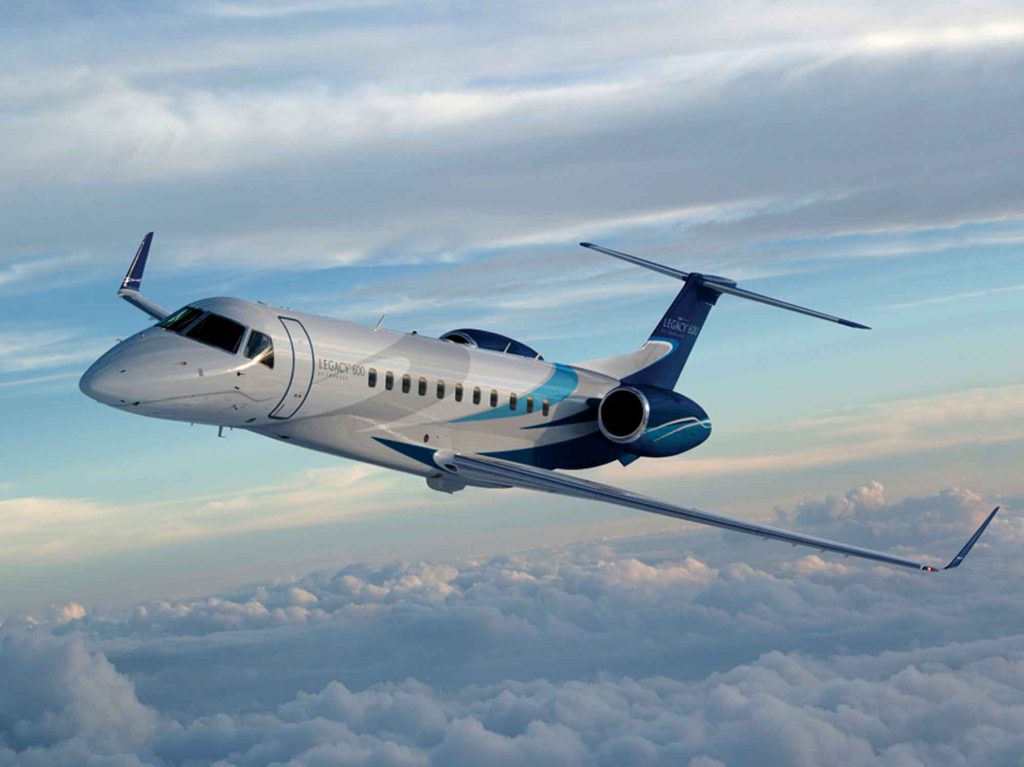
Embraer’s debut in the business jet market, the Legacy 600, offered unrivaled spaciousness when compared to other models at the time. Its design was carefully crafted to incorporate all necessary elements for an efficient in-flight workspace.
The Legacy 600 was manufactured from 2002 to 2012, after which it was succeeded by the Legacy 650.
Be sure to review the specifications before purchasing a Legacy 600.
The Legacy 600 has dimensions of 86ft 5in in length and a height of 22ft 2in, while its wingspan is just under 69ft.
The AE3007 engines from Rolls-Royce provide an impressive 7,987lbs of thrust, allowing the jet to reach a high speed cruise of 455 knots. This aircraft can comfortably accommodate up to eight passengers and has an impressive range of 3,250 nautical miles. Its cruising altitude reaches a height of 39,000ft and can soar as high as 41,000ft at its maximum ceiling.
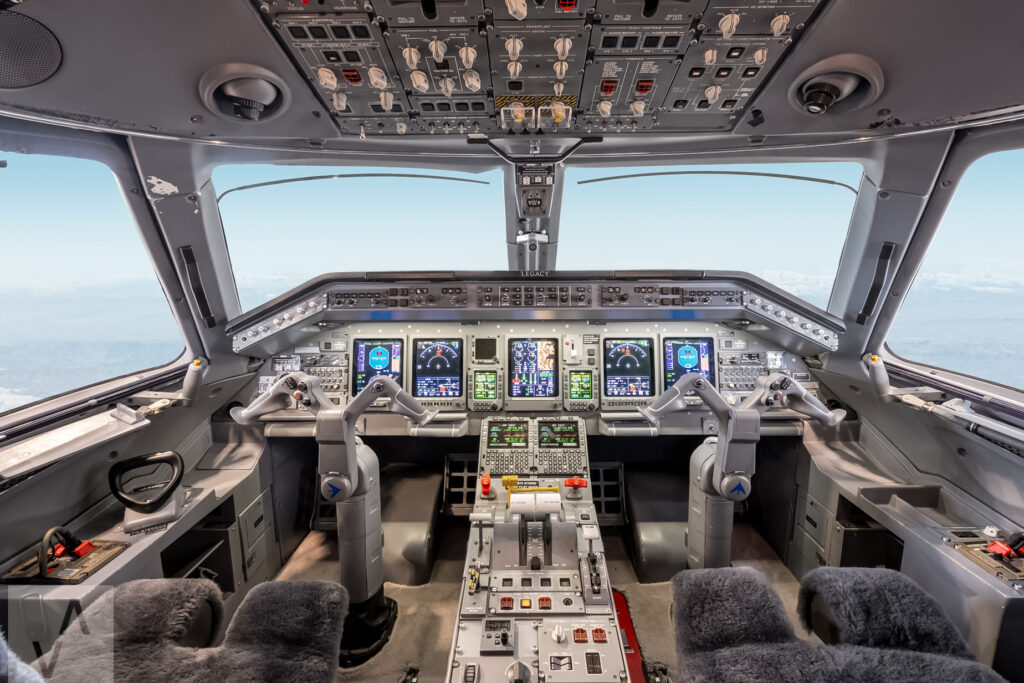
Equipped with a highly functional Honeywell Primus 1000 avionics system, the cockpit significantly eases the pilot’s duties.
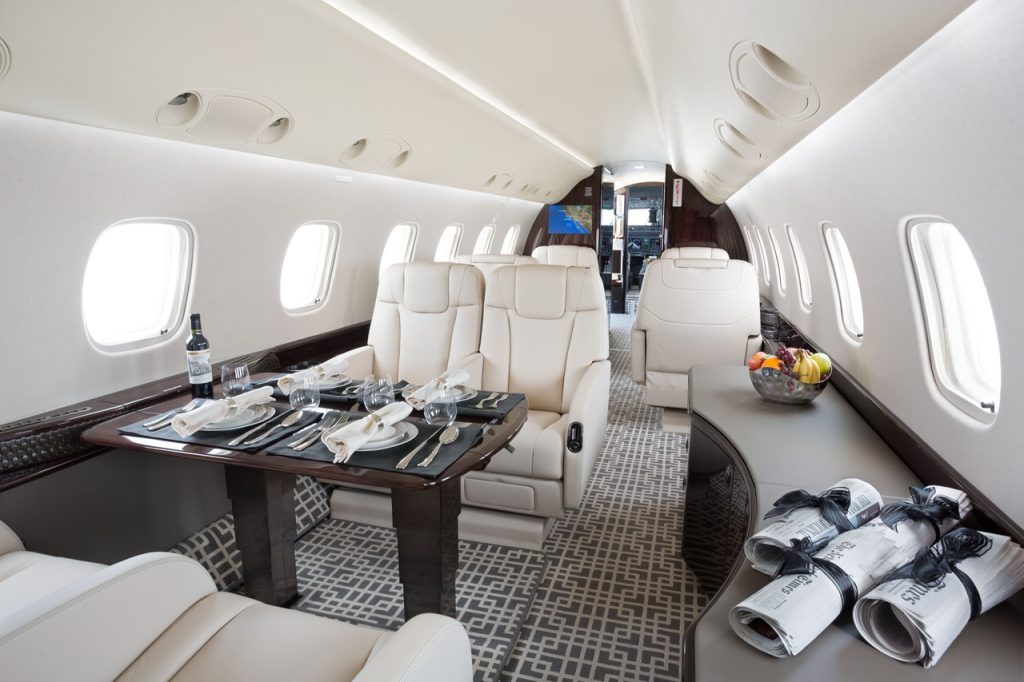
The stand-up cabin measures 6ft in height, 6ft 9in in width, and 42ft 4in in length. It is divided into three sections and provides seating for 13 passengers. The chairs are a combination of leather and a side-facing sofa, with multiple tables available. The seats can easily convert to six flat beds. In addition, there are two toilets and a separate bar/galley equipped with an oven and microwave.
The aircraft includes a 240 cubic foot baggage compartment that is easily accessible during the flight.
The Legacy 600 boasts an advanced entertainment system, including 2 DVD players, 1 video player, and 10 personal screens. Additionally, passengers can access high-speed wireless internet, utilize power outlets, and make use of the satellite phone system with three handsets. The Airshow Cabin Information System also provides a moving map display for added convenience.
If you are considering purchase a small jet either for personal or business use – Then please contact us today where we can guide you through the current aircraft marketplace as well as discuss aircraft costs and values. Contact Us
Interested in the Embraer Phenom 500? View our Embraer Phenom 500 business jet guide HERE
Embraer Legacy 600 Specifications
| Specification | Detail |
|---|---|
| Length | 86.4 ft (26.33 m) |
| Wingspan | 69.4 ft (21.16 m) |
| Height | 21.0 ft (6.40 m) |
| Cabin Length | 42.3 ft (12.89 m) |
| Cabin Width | 6.9 ft (2.10 m) |
| Cabin Height | 6.0 ft (1.82 m) |
| Max Take-Off Weight (MTOW) | 49,604 lb (22,500 kg) |
| Max Range | 3,400 nm (6,297 km) |
| Max Cruise Speed | 474 ktas |
| Max Altitude (Ceiling) | 41,000 ft |
| Engines | 2x Rolls-Royce AE 3007A1/3 turbofan |
| Typical Passenger Capacity | 10–13 |
| Baggage Volume | 240 cu ft (6.80 m³) |
Legacy 600 Ownership Costs
The Legacy 600 delivers large-cabin volume at operating costs that sit below more recent large-cabin competitors, making it a practical choice for buyers who prioritise space and range over cutting-edge avionics.
Annual fixed costs for a standard two-crew plus cabin attendant operation run from £800,000 to £1,150,000. The Rolls-Royce AE 3007A1/3 engines on the 600 share the same core architecture as those on the 650 but are rated at slightly lower thrust. CorporateCare programme enrolment is the standard approach among professional operators and is recommended. Engine maintenance costs outside a programme can be unpredictable and significant.
Variable operating costs per flight hour typically fall between £2,900 and £4,000, reflecting combined fuel burn of approximately 380–430 US gallons per hour and maintenance reserves. The Legacy 600’s older avionics (Honeywell Primus 1000 on early builds, Rockwell Collins Pro Line 4 on later examples) are serviceable but upgrades carry cost — factor in £150,000–£400,000 for a meaningful avionics refresh on an early-build aircraft if required.
Airframe inspection intervals follow Embraer’s approved programme. C-check equivalent work at major intervals costs £250,000–£450,000 depending on findings. Allow £100,000–£180,000 annually for routine scheduled maintenance.
Legacy 600 Market Position and Resale Value
The Legacy 600 occupies a value-driven position in the large-cabin market. It is an older design than the 650 and this is reflected in pricing — well-maintained examples are available from approximately £4.5 million to £9 million, making it one of the most accessible routes into large-cabin, intercontinental-adjacent private aviation.
Depreciation on the Legacy 600 averages 7–10% annually at this stage of the type’s life. Engine status is the single biggest driver of value: aircraft enrolled on CorporateCare with current hot section inspections command a premium of £500,000–£1,000,000 over comparable non-programme aircraft. Buyers should always conduct a full pre-purchase inspection through an Embraer-authorised MRO before committing to acquisition. Market liquidity is moderate; expect 90–150 days for a typical transaction.
Legacy 600 Variants and History
The Legacy 600 entered service in 2001, derived from the Embraer ERJ-135 regional jet platform. Embraer’s rationale was straightforward: adapt a proven, type-certified airframe with an established supply chain into a dedicated business jet by stretching the cabin, adding a new interior, and installing higher-thrust engines. The result was an aircraft offering cabin volume that rivalled aircraft costing significantly more to acquire and operate.
Initial production aircraft used the Honeywell Primus 1000 avionics suite. A significant avionics upgrade mid-production introduced the Rockwell Collins Pro Line 4 system, improving situational awareness and reducing pilot workload. Winglets were added as a production option from approximately 2006 and are fitted to most late-production and retrofitted airframes.
The Legacy 600 was replaced in the Embraer product line by the Legacy 650 from 2010, which used the identical airframe but with increased fuel capacity and the winglets as standard equipment. Embraer continued to support Legacy 600 operators comprehensively; the type remains fully supported by the manufacturer’s global service network, which includes facilities in Europe, the Americas, and the Middle East.