

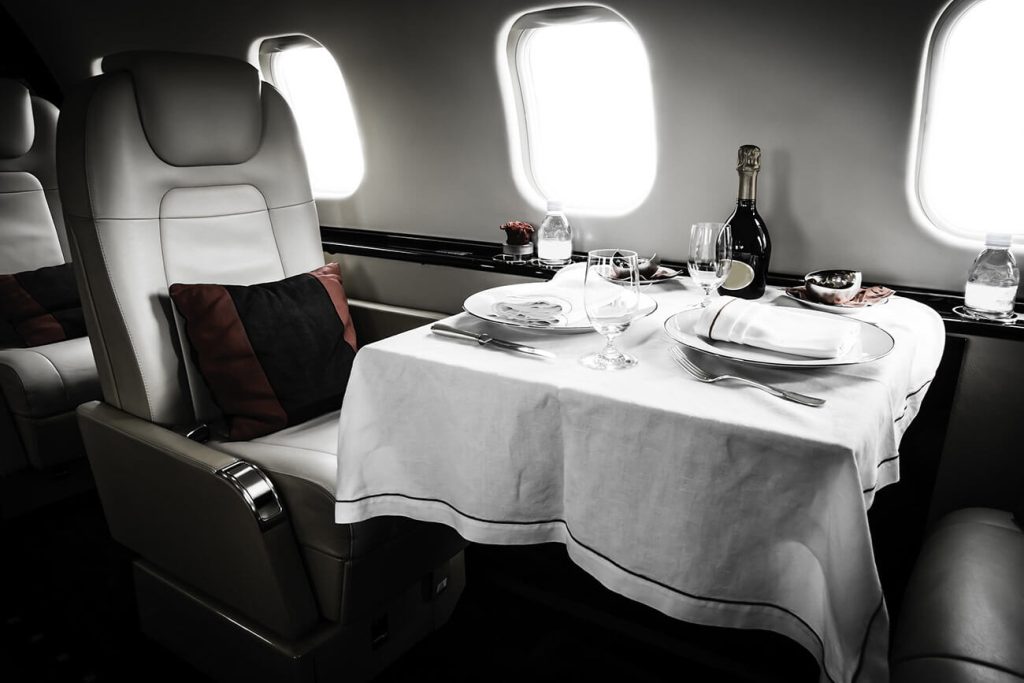
The comparison between private jet travel and first class commercial flights is often framed as a pure luxury question. In reality, the decision is far more nuanced and depends on factors including time value, route availability, group size, schedule flexibility, and total door-to-door journey time.
Time: The Most Valuable Commodity
The fundamental advantage of private jet travel is not the champagne or the leather seats. It is time. A private jet eliminates the dead time that makes commercial travel inefficient: the advance check-in, the security queues, the boarding process, the ground time at the gate, and the wait for luggage on arrival.
Consider a London to Geneva business trip:
| Factor | Private Jet | First Class Commercial |
|---|---|---|
| Pre-departure arrival | 15 minutes | 90 minutes |
| Security and boarding | 5 minutes | 30 minutes |
| Flight time | 1h 30m | 1h 45m |
| Disembarkation and luggage | 5 minutes | 30 minutes |
| Total door-to-gate time | 1h 55m | 3h 35m |
On a return trip, private jet travel saves approximately 3 hours and 20 minutes. For a frequent traveller making this journey 30 times per year, the annual time saving exceeds 100 hours, equivalent to more than 12 full working days.
Cost Comparison
A first class return ticket from London to Geneva costs approximately £2,500 to £4,000. A private jet charter for the same route costs approximately £8,000 to £14,000 depending on aircraft type and availability.
For a single traveller, first class is significantly cheaper. However, the calculation changes with group size. Four business travellers sharing a light jet charter pay roughly the same per person as individual first class tickets, while gaining the benefits of flexible scheduling, privacy, and direct access to airports closer to the final destination.
For aircraft owners, the marginal cost of a flight (fuel, landing fees, and crew expenses) is considerably lower than charter rates, making the per-flight economics more favourable.
Access and Flexibility
Commercial first class is available on a limited number of routes from a limited number of airports. Private jets can access over 3,000 airports across Europe, many of which have no scheduled airline service. This makes private aviation essential for reaching destinations like Aspen, Mykonos, or the Scottish Highlands without lengthy ground transfers.
Schedule flexibility is equally important. Commercial flights operate to fixed timetables. A private jet departs when you are ready, waits if your meeting runs late, and can change destination mid-trip if circumstances require.
Privacy and Productivity
A private jet cabin is a confidential workspace. Sensitive business discussions, contract reviews, and strategy meetings can take place without the risk of being overheard. Many business jet users cite this privacy as the primary reason they chose private aviation, particularly in sectors where information sensitivity is paramount.
The Hybrid Approach
Many UK business travellers use a combination of private and commercial aviation. Commercial first or business class serves well for predictable, long-haul routes where time savings are proportionally smaller. Private jets are deployed for European trips where schedule flexibility, multiple-stop itineraries, or access to smaller airports delivers a meaningful advantage.
This hybrid approach optimises cost while preserving the benefits of private aviation where they matter most.
To explore whether private jet ownership suits your travel pattern, browse private jets for sale in the UK or contact Aviator Aircraft Sales for an honest assessment of the options available to you.