

Buyers Guide To The Cessna Citation CJ1
This guide covers a Buyer’s Guide to Purchasing a Cessna Citation CJ1 Aircraft.
The Cessna CJ1 has a long and rich history. Its story dates back several decades, with each chapter filled with notable moments. From the initial concept to its first flight, the CJ1 has had many milestones over the years. Its journey has been marked by continuous improvement and advancements, making it a highly regarded aircraft in the present day.
The Cessna CJ1, a member of the Cessna Citation Jet family, is a second-generation light business jet. Its initial release was in 1999, following its predecessor the Citation Jet which debuted in 1993 and prioritized simplicity, economy, and performance. Production of the CJ1 ceased in 2005, later followed by the introduction of the CJ2 and other CJ models.
Interested in purchasing a Cessna CJ1? Here are the specifications for your consideration.
Not only does the Cessna CJ1 offer the same advantages of the previous Citation Jet model, but it also boasts added economic and performance perks. With a fuel consumption rate of approximately 134 gallons per hour, achieved through its two fuel-efficient Williams FJ44 turbofan engines, each with 1,900 lbs of thrust during take-off, this aircraft outperforms its predecessor. It can now handle a maximum take-off weight of 10,600 lbs and has a maximum fuel capacity of 3,200 lbs – both increases resulting in improved range and payload flexibility. Additionally, the CJ1 has a faster cruising speed than the Citation Jet. It is designed for both crewed and single-pilot operations, making it cost-effective to operate. It can reach a maximum operating altitude of 41,000 ft and maintain a cruising speed of 377 kts.
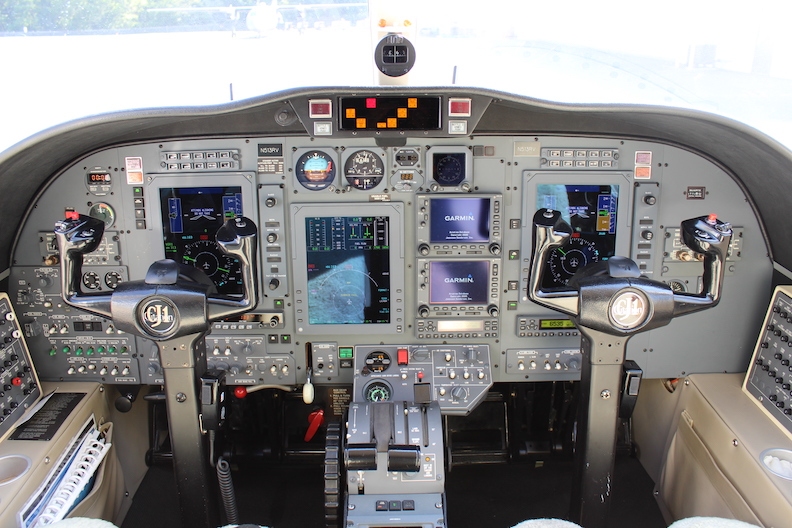
The Cessna CJ1 boasts a natural laminar flow airfoil, a joint effort between Cessna and NASA that effectively minimizes drag and enhances speed in comparison to its predecessors with standard wings. Additionally, it is equipped with the Collins Pro Line 21 avionics package, featuring flat panel screens for both the Primary Flight Display and Multi-Function Display.
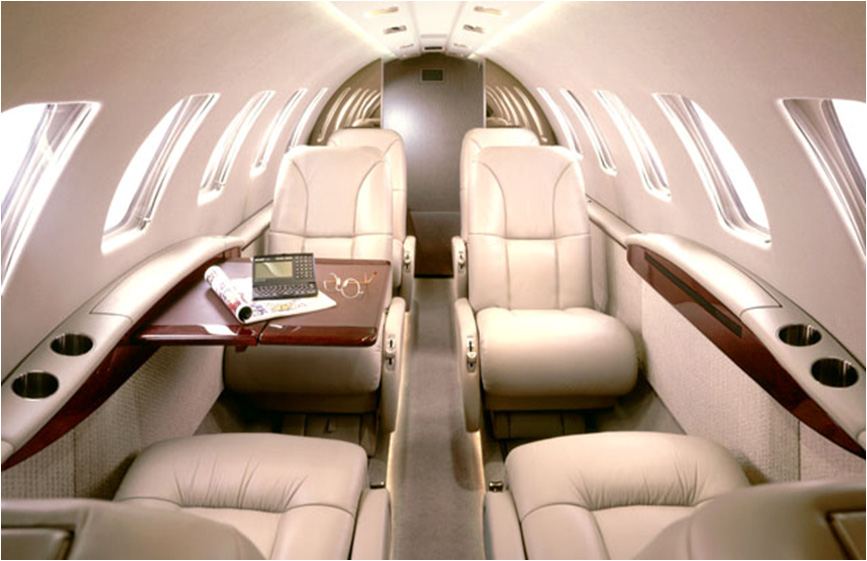
Despite its affordability, the CJ1 boasts a surprisingly spacious and cozy cabin. It features a full-length dropped aisle that comfortably seats five passengers, and the double sealed plane door effectively minimizes cabin noise.
If you are considering purchase a small jet either for personal or business use – Then please contact us today where we can guide you through the current aircraft marketplace as well as discuss aircraft costs and values. Contact Us
Interested in the Cessna CJ2? View our CJ2 business jet guide HERE
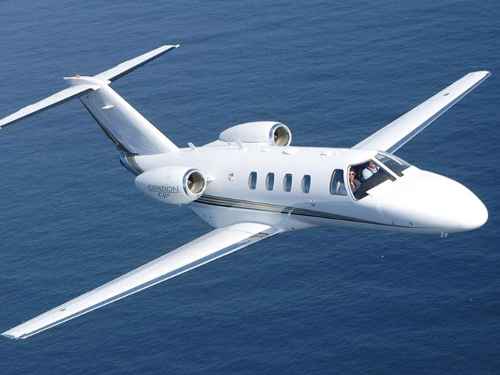
Cessna Citation CJ1 Specifications
| Specification | Detail |
|---|---|
| Length | 42.6 ft (12.98 m) |
| Wingspan | 46.8 ft (14.26 m) |
| Height | 13.7 ft (4.18 m) |
| Cabin Length | 11.0 ft (3.35 m) |
| Cabin Width | 4.8 ft (1.46 m) |
| Cabin Height | 4.7 ft (1.43 m) |
| Max Take-Off Weight (MTOW) | 10,600 lb (4,808 kg) |
| Max Range | 1,300 nm (2,408 km) |
| Max Cruise Speed | 389 ktas |
| Max Altitude (Ceiling) | 41,000 ft |
| Engines | 2x Williams FJ44-1AP turbofan |
| Typical Passenger Capacity | 4–5 |
| Baggage Volume | 57 cu ft (1.61 m³) |
CJ1 Ownership Costs
The Citation CJ1 and its successor the CJ1+ represent some of the most cost-efficient jet ownership available in the pressurised turbofan category. For owner-pilots who hold a type rating and intend to fly frequently on regional routes, the economics are compelling.
Annual fixed costs for a single-pilot private operation are typically £130,000–£200,000, covering insurance, hangarage, pilot costs (owner-pilot or contractor), and subscriptions. The FJ44-1AP engines are well within the Williams TAP coverage programmes and engine reserve predictability is good. For charter operations requiring two crew, fixed costs increase to approximately £280,000–£380,000.
Variable costs per flight hour run from approximately £750 to £1,100 including fuel (combined burn of approximately 90–110 US gallons per hour at cruise), engine reserves, and maintenance consumables. The CJ1+ variant, with the FJ44-1AP engine, offers marginally better hot-and-high performance than the original CJ1’s FJ44-1A, which is worth confirming when evaluating pre-owned examples.
Scheduled maintenance follows Cessna’s phased structure. Annual inspection costs are in the range of £20,000–£40,000 for a well-maintained airframe. The CJ1’s relatively simple systems and the global availability of Williams FJ44-qualified engineers keeps AOG incidents short and costs manageable. Avionics on CJ1 airframes range from the original Honeywell Primus systems to Garmin retrofits — confirm the avionics fit before purchase as this significantly affects cockpit workload and resale values.
CJ1 Market Position and Resale Value
The CJ1 and CJ1+ are entry-level jets for buyers seeking genuine jet performance in a four to five-seat configuration at the lowest practicable acquisition and operating cost. They are most commonly operated by owner-pilots and small corporate operators on short to medium regional routes.
Pre-owned CJ1 values have depreciated substantially from their original purchase prices, making them accessible entry points into jet ownership. CJ1 examples (2000–2004 production) typically trade between £900,000 and £1.8 million. CJ1+ models (2005–2012) command £1.5–£2.8 million. Annual depreciation at this stage of the type’s life averages 5–8% depending on hours and configuration. Market liquidity is reasonable — the CJ family has a large and loyal following, which ensures buyer awareness is high when examples come to market.
CJ1 Variants and History
The Citation CJ1 is the direct successor to the original Citation Jet (CJ), which itself was derived from Cessna’s ground-breaking Citation I/II lineage. Cessna launched the CJ series as a rationalisation of the Citation product line, introducing a new naturally laminar flow (NLF) wing that significantly improved aerodynamic efficiency over the earlier T-tail designs.
The Citation CJ1 replaced the original Citation Jet in the Cessna lineup, receiving FAA certification in 2000. It introduced the Williams FJ44-1AP engine (a slightly upgraded version of the FJ44-1A used in the original CJ) and improved avionics. The airframe dimensions are identical to the original CJ — the cabin and fuselage remain unchanged between the Citation Jet, CJ1, and CJ1+.
The CJ1+ entered production in 2005 with further engine refinements and the Garmin G1000 avionics option alongside the standard Honeywell Primus suite. Production of the CJ1+ continued until 2015, when Textron Aviation ceased production in favour of directing buyers toward the CJ3+ and CJ4. The type remains fully supported by Textron Aviation’s service network, with parts availability rated as good across the US and Europe.