

Buyers Guide To The Embraer Phenom 300
This guide covers a Buyer’s Guide to Purchasing a Embraer Phenom 300 Aircraft.
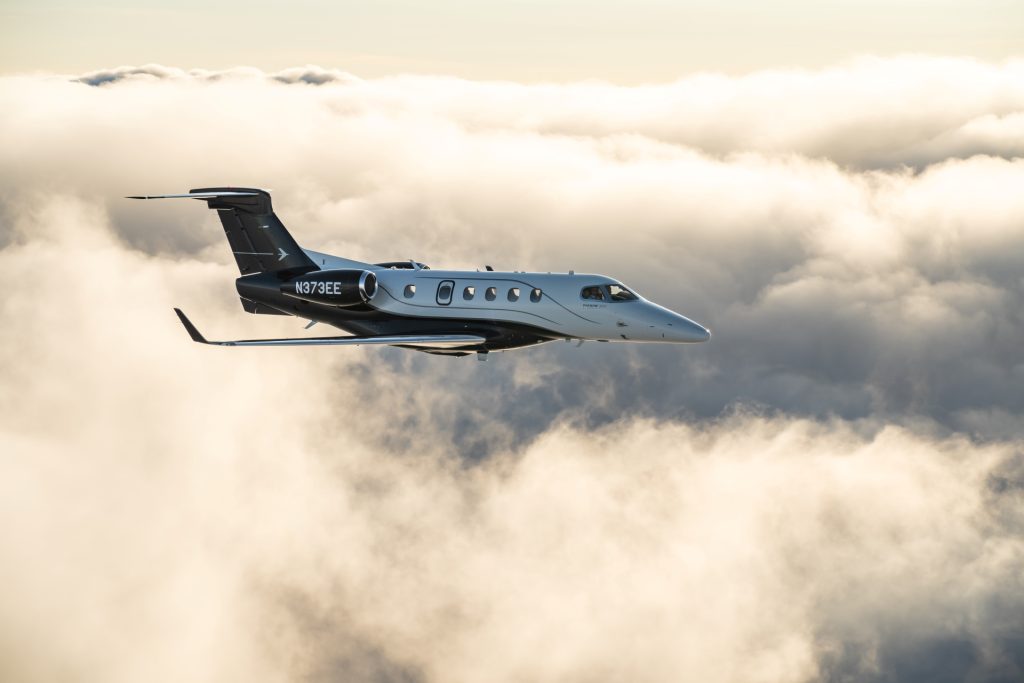
The Embraer Phenom 300 has a rich history. It was first introduced in 2009 and quickly gained popularity among aviation enthusiasts. Throughout the years, this aircraft has undergone various upgrades and improvements, making it one of the most sought-after models in its class. Its sleek design, advanced technology, and exceptional performance have solidified its reputation as a top choice for private jet transportation. From its debut to present day, the Embraer Phenom 300 continues to be a leading player in the world of business aviation.
The Embraer Phenom 300 executive jet took flight in 2008 and received certification in December 2009. Positioned as a larger counterpart to the Phenom 100, this model held the title of top-selling light business jet for six years in a row.
Check the specifications before purchasing a Phenom 300.
Measuring in at 52.2ft in length, with a height of 16.5ft and a wingspan spanning 53.2ft, is the Phenom 300.
The Phenom 300 boasts two Pratt & Whitney Canada PW535E engines, each with a powerful thrust of up to 3,360lbs. Its range spans 1,811 nautical miles for normal flights and an impressive maximum of 2,077nm. The jet can reach a top cruising speed of 517mph and has the ability to operate at an altitude of up to 45,000 feet.
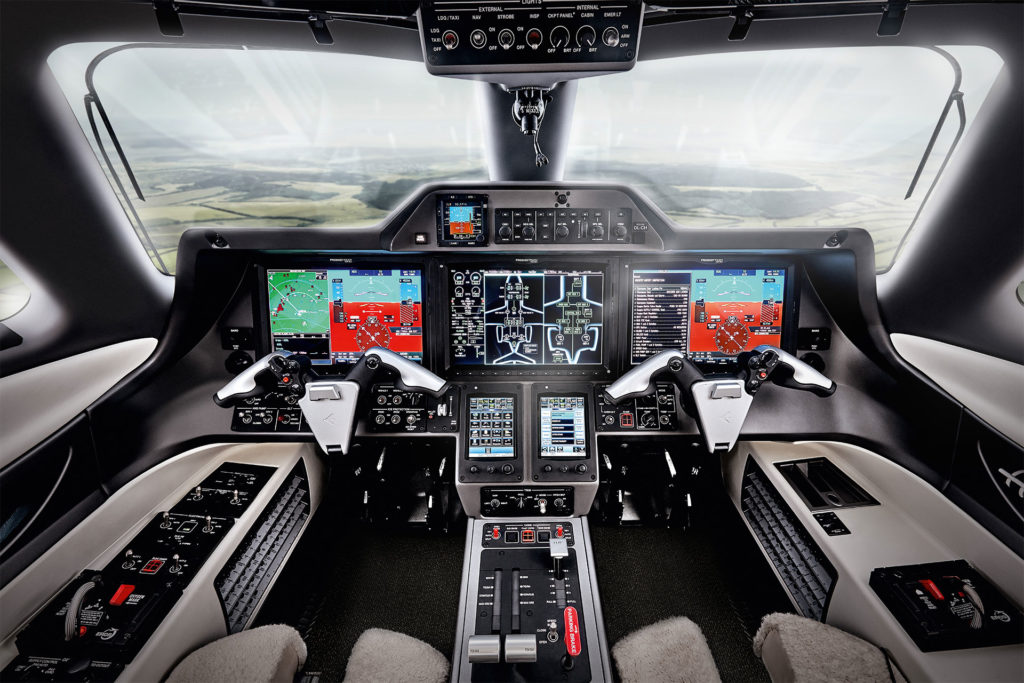
The Phenom 300 is equipped with the Garmin Prodigy avionics system for its flights.
The spacious cabin, measuring 17.2ft in length, 5.1ft in width, and 4.11ft in height, was created through a partnership with BMW DesignworksUSA. An abundance of natural light floods the cabin through its 11 galley windows. Accommodating up to seven passengers, the seats are all equipped with swivel, slide, and recline functions. Additionally, there is a generous internal baggage capacity of 19 cubic feet.
The Phenom 300 boasts a state-of-the-art entertainment system, complete with a 10.4in screen, CD and DVD player, and high-speed internet access. It also includes a satellite phone system for communication. Additionally, the cabinets offer convenient amenities such as a coffee maker, drinks storage, and an ice drawer.
If you are considering purchase a small jet either for personal or business use – Then please contact us today where we can guide you through the current aircraft marketplace as well as discuss aircraft costs and values. Contact Us
Interested in the Cessna CJ4? View our CJ4 business jet guide HERE

Embraer Phenom 300 Specifications
| Specification | Detail |
|---|---|
| Length | 52.2 ft (15.90 m) |
| Wingspan | 53.2 ft (16.20 m) |
| Height | 16.5 ft (5.03 m) |
| Cabin Length | 17.2 ft (5.24 m) |
| Cabin Width | 5.1 ft (1.55 m) |
| Cabin Height | 4.9 ft (1.50 m) |
| Max Take-Off Weight (MTOW) | 18,387 lb (8,340 kg) |
| Max Range | 2,010 nm (3,723 km) |
| Max Cruise Speed | 453 ktas |
| Max Altitude (Ceiling) | 45,000 ft |
| Engines | 2x Pratt & Whitney Canada PW535E1 turbofan |
| Typical Passenger Capacity | 7–10 |
| Baggage Volume | 84 cu ft (2.38 m³) including external nose compartment |
Phenom 300 Ownership Costs
The Phenom 300 has become the world’s best-selling light jet for multiple consecutive years, a fact that reflects its operating economics as much as its performance. Its cost profile is well-understood by operators, brokers, and financiers alike.
Annual fixed costs for a single-pilot owner-operated Phenom 300 run from approximately £250,000 to £380,000. Two-pilot charter operations add significantly to this figure — expect £420,000–£550,000 when including a second pilot and cabin-standard requirements. Hull insurance for a current example is competitive given the large installed fleet and strong safety record.
Variable costs per flight hour are typically £1,100–£1,600, including fuel (the PW535E1 engines burn approximately 155–170 US gallons per hour combined at high-speed cruise), engine reserves, and maintenance. Pratt & Whitney’s ESP programme covers the PW535 family and is the standard choice. Engine overhaul costs outside a programme are approximately £180,000–£260,000 per engine at time-limited intervals.
Scheduled airframe maintenance follows Embraer’s approved programme; the Phenom 300’s composite structure and Embraer’s phased maintenance schedule keep planned downtime to a minimum. Annual routine maintenance costs are in the range of £30,000–£60,000 for a well-maintained aircraft. ADS-B compliance retrofits are complete on virtually all pre-2020 examples now.
Phenom 300 Market Position and Resale Value
The Phenom 300 sits at the top of the light jet category and competes meaningfully with the lower end of the mid-size segment. Its cabin, while not stand-up, is the widest and most comfortable in its class, and the range puts it within reach of transalpine and trans-Channel missions with ease.
Pre-owned values are well-supported across all years of production. Early Phenom 300s (2009–2013) trade from approximately £2.8 million to £4.5 million; mid-production aircraft (2014–2018) command £4.5–£6.5 million; and Phenom 300E examples (2018 onward) regularly trade above £7 million. Annual depreciation averages 4–7%, making this one of the more value-retentive light jets available. Market liquidity is excellent — the Phenom 300 is among the most frequently transacted pre-owned types in European and North American markets.
Phenom 300 Variants and History
Embraer announced the Phenom 300 at NBAA 2006, positioning it as the larger sibling to the simultaneously announced Phenom 100. The first flight took place on 29 April 2008, with ANAC certification in December 2009, FAA certification also in December 2009, and EASA certification following in early 2010. First deliveries began in December 2009.
The original Phenom 300 introduced the Garmin G3000 avionics suite (branded by Embraer as the Prodigy Touch system), setting a benchmark for touchscreen integration at its price point. The PW535E1 engines, paired with a swept wing and winglets, delivered performance that exceeded most competitors in the light jet class at the time of certification.
The Phenom 300E, introduced in 2018, is the current production standard. Improvements over the original include a revised cabin interior with larger windows, improved lighting and insulation, enhanced cabin management systems, a redesigned galley, and performance refinements. The 300E also introduced the option for a belted lavatory, bringing the maximum certified passenger capacity from 9 to 10 in certain configurations.
A military utility variant, the A-29 Super Tucano, is unrelated; however Embraer’s defence division does operate several Phenom 300 derivatives for government and special mission customers. The Phenom 300 remains in full production at Embraer’s Gavião Peixoto facility in Brazil, with additional completions at Nashville, Tennessee for North American customers.